THC Calculator Edibles: A Step-by-Step Dosing Guide
Edibles are deceptively simple. You take a bite, wait for the effects, and hope you guessed right. The problem is that edibles do not behave like inhaled THC. They hit later, they last longer, and the same dose can land very differently from one person to the next.
That is where a THC calculator edibles approach helps. Not because math magically removes uncertainty, but because it forces you to translate “one gummy” or “a spoonful of tincture” into milligrams and then match those milligrams to your goals and your tolerance.
Below is a practical, step-by-step way to use a THC in edibles calculator mindset, troubleshoot common mistakes, and choose a starting dose without guesswork.
Why edible dosing feels harder than you expect
A lot of people learn dosing in the smoking or vaping world. With inhalation, you feel something quickly, and you can titrate in smaller increments. Edibles don’t give you that luxury. THC is metabolized in the liver into 11-hydroxy-THC, which is often more intense for many people and more likely to change the character of the high.
Even if two edibles are both labeled “10 mg THC per serving,” the lived experience can still vary due to:
- how much you ate beforehand
- your metabolism and body composition
- the presence of fat in the meal (which can affect absorption)
- tolerance and past tolerance breaks
- your expectations and sensitivity to THC
So when you see an edibles thc calculator pop up online, the real win is not the number it spits out. The win is that you start thinking in mg increments, track what you took, and adjust with a repeatable method.
The dosing math, in plain English
Most THC edibles dose calculator tools, including the general THC Edibles Calculator style of calculators, are doing variants of the same idea:
- Start with how much THC is in the whole product or the whole container.
- Convert that into THC per unit you can measure (per gummy, per ml, per cookie square, per teaspoon, and so on).
- Decide how many mg you want to take, based on your tolerance and your goal.
- Convert “mg target dose” back into a real-world serving size.
To do that yourself, you need two inputs, either from a label or from verified packaging:
- Total THC in the edible (for example, “1000 mg THC in the entire jar”)
- How the edible is portioned (for example, “50 gummies in the jar,” or “30 ml total tincture volume,” or “10 cookies in the pack”)
Once those two are known, mg per serving becomes a simple ratio.
The core ratio
If the label tells you total THC and the edible contains N servings, then:
- THC per serving = total THC ÷ N
If instead it tells you mg per ml (common with tinctures) or mg per gram (less common, but sometimes seen with infusions), you calculate the reverse the same way.
Then your desired dose becomes:
- Serving amount to take = target mg ÷ mg per serving
A good THC calculator edibles workflow is just this ratio repeated with the units you actually have in front of you.
Step-by-step: using a THC calculator for edibles without getting tricked
Let’s walk through a real setup. The goal is not to perform a complicated formula, it is to avoid the common mistakes: wrong unit, wrong serving size, or misreading the label.
A practical worksheet (with the kinds of labels people actually see)
Imagine you have a gummy package that says:
- Total THC per jar: 500 mg
- Number of gummies: 25
Step one: find mg per gummy.
500 mg ÷ 25 = 20 mg per gummy
Now imagine you want a starting dose that is not too strong.
For many people new to THC edibles (or returning after a break), a cautious starting range often falls around 2.5 mg to 5 mg THC. Some people can handle a bit more, and some need less. The safe move is to start low and adjust next time.
If you choose a 5 mg target:
5 mg ÷ 20 mg per gummy = 0.25 of a gummy
That means you are looking for a quarter gummy, not “one gummy” because the package is built for “servings,” not for careful dosing.
If your gummies are not easily divisible, you have two options: use a method to portion consistently (for instance, cutting or weighing) or choose a different product with lower mg per unit.
Quick dosing workflow
Use this as your default sequence with any THC calculator edibles tool.
- Confirm the label’s THC figure and units (total mg, mg per serving, or mg per ml)
- Convert to mg per real unit you can measure (per gummy, per ml, per cookie)
- Pick a target mg dose, using your tolerance and sensitivity as the anchor
- Calculate serving fraction to match your target
- Write down what you took, time of ingestion, and your peak effect
That last part, the notes, matters more than people expect. Edible dosing is less about one perfect calculation and more about building a personal map.
Choosing a starting dose: the judgment calls calculators cannot make
A calculator can tell you the math, but it cannot tell you whether your particular nervous system will interpret THC as calm and cozy or as anxiety and paranoia. Your starting dose is partly physiology and partly context.
Here are the factors that should influence your target mg, even if you are using a THC in edibles calculator:
Tolerance level and recency. If you use THC regularly, 10 mg might feel mild or even meaningless. If you are taking a break, 10 mg can feel intense. Even “occasional” use can mean you have more tolerance than you realize.
Goal versus sedation. Some people want subtle body relaxation and better sleep. Others want euphoria and creative headspace. THC can do both, but higher doses tend to push toward sedation and mental fog for many people.
Anxiety sensitivity. If you are prone to panic or uncomfortable physical sensations, lower doses and slower escalation are the difference between a pleasant evening and a stressful one.
Food and timing. Taking edibles with food, especially meals that include fat, can change how quickly you feel it and how strong it feels. You do not have to treat food like a variable you eliminate, but you should treat it like a variable you respect. If you always take edibles after dinner, keep that consistent when testing doses.
A small aside that is worth saying plainly: if you are brand new to THC edibles, it is usually wiser to under-shoot than to “find the right dose” quickly. Edibles can take time to fully peak, and redosing too soon is one of the fastest ways people overshoot.
How to avoid the two biggest calculator mistakes
Mistake 1: mixing up “per serving” and “total package”
Some labels are clear, some are not. If your edibles thc calculator assumes total THC but you accidentally feed it mg per serving, your dose estimate can be off by a factor of the number of servings.
When you check the label, look for phrasing like:
- “total THC in the package”
- “THC per serving”
- “servings per container”
If those words are inconsistent or confusing, do the math by whichever statement is explicit.
Mistake 2: pretending each unit is the same size and THC concentration
With edibles like gummies and chocolates, the shape might look uniform, but real pieces can differ slightly. This is more of an issue when a product has high mg per unit, because a small variation can matter.
That is why the “0.25 gummy” scenario can become tricky. A calculator can tell you exactly what fraction you need. It cannot tell you whether you can portion it precisely enough to hit that target.
If your edible is hard to portion, you can reduce risk by choosing a product with lower mg per unit or by using a format that lets you measure more precisely, like a tincture in ml.
Example dosing scenarios you can map to your product
Let’s translate the calculator logic into a few realistic situations.
Scenario A: gummies with high mg per piece
You have a gummy pack edibles thc calculator with 1000 mg THC total and 20 gummies. That is 50 mg per gummy.
If you want to start at 5 mg, you need 0.1 of a gummy, which is very hard to measure. In this case, a THC calculator edibles can tell you the “right” dose, but your handling method might not support it.
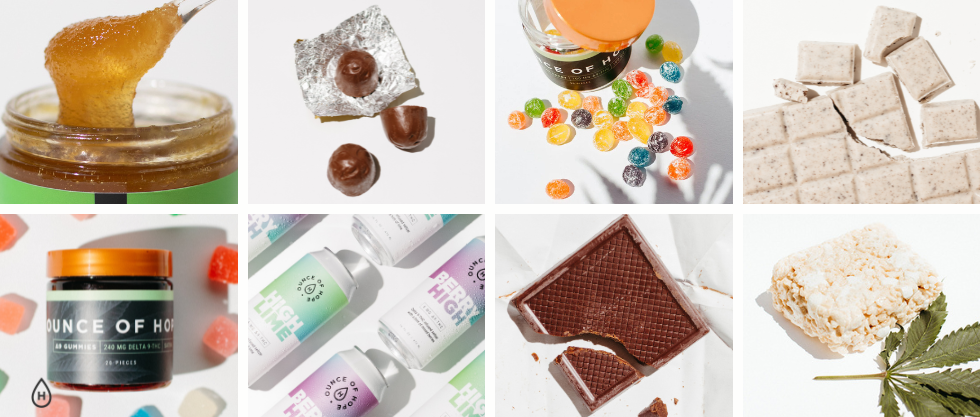
A practical adjustment is to switch to either a lower-potency gummy or a tincture. If you stick with high-potency gummies, you can portion by weighing: place the gummy on a scale, weigh the edible piece you are taking, and then calculate your portion based on fraction of total weight. This is tedious, but it can be more reliable than eyeballing.
Scenario B: tincture with mg per ml
Your tincture label says 10 mg THC per ml, and the bottle holds 30 ml.
Total THC is 300 mg. You want a starting dose of 2.5 mg.
2.5 mg ÷ 10 mg/ml = 0.25 ml.
Now you need a way to measure 0.25 ml accurately. Some droppers are labeled by “drops,” which can be inconsistent. If your dropper gives you only rough drop counts, it is better to use a syringe or a measuring dropper designed for ml increments.
Scenario C: cookies with mg per square
Your cookie box says 200 mg THC total and “10 cookie servings,” and each serving is one square. That means 20 mg per square.
Target dose 5 mg means 0.25 of a square. Most people cannot do that consistently by eye, so you would either accept a slightly higher dose (for instance, 5 to 7.5 mg depending on how you portion) or choose a product with lower mg per piece.
This is an underrated point: edible The original source dosing is partly measuring accuracy. A calculator can help you aim, but you still need a workable measurement method.
A note about calculators that ask for “how much you want” first
Some THC Edibles Calculator interfaces work backward: you input your edible’s THC per serving and your target mg, and it returns how much to take. Others work forward from “number of servings” and return mg.
Either approach can be fine, but you want to watch the direction because it changes how you interpret the input boxes. If a calculator says “total THC” and you enter “per serving,” your math will be wrong in a way that feels plausible.
If you are using a calculator branded on a wellness or dispensary site, including a tool you might see referenced as an “Ounce of Hope” THC calculator, treat the math as a black box you verify. The fastest way to verify is to do a manual check on one simple scenario, then compare the result.
Timing and redosing: the real-world constraint
Most edibles follow a general pattern: onset can be slow, then effects build, often peaking later than people expect. Redosing too soon is the common failure mode because the first noticeable effects are not always the peak.
If you are using a THC calculator edibles approach, you still need a rule for when to re-evaluate. A conservative rule is to wait long enough for the first dose to develop fully before taking more. The exact timing varies by product and body, so use a bigger window than your impatience wants.
A practical approach is to plan your dose and then treat it like a scheduled event rather than a snack you can optimize in real time. If you want to take more, base that decision on how you feel after the edible has had adequate time to peak, not just on how it feels at the first twinge of onset.
When dose targets don’t match the edible form
Not all THC edibles are created equal in measurement convenience.
Gummies and chocolates
These are easy to consume, hard to portion. High potency is where portioning becomes the bottleneck. If you must dose precisely, you might prefer a product that offers smaller THC per piece or a format you can measure.
Tinctures and oils
These are easier to dose by volume. The bottleneck is droppers and measurement tools. You can solve that with a syringe or a measuring dropper that is labeled for ml.
Drinks and powders
If the label provides mg per can or mg per scoop, the calculation is straightforward. If it is vague, do not guess. Measure the whole bottle contents if you can, or choose a clearer product next time.
This is why “THC in edibles calculator” logic should be matched to how you can actually measure your dose in your kitchen or on your counter.
A simple comparison: mg targets versus “how strong it feels”
A THC calculator gives you milligrams, but your experience is not a linear straight line. Doubling a dose does not always feel like double the intensity, especially once you are approaching the range where anxiety and fatigue become more likely for you.
Instead of chasing a perfect number, use the calculator to land in a reasonable range and then evaluate on three dimensions:
- How your mind feels (clarity versus mental drift)
- How your body feels (relaxation versus heaviness)
- How your emotions respond (calm versus overstimulation)
If the mind feels sharp and the body feels relaxed, you are likely in a good band. If you feel racing thoughts, nausea, or an uncomfortable body load, your mg target was likely too high for your current state.
Keeping track: the record that makes future doses easier
The first time you dose with math can feel overbuilt. The second time is where it pays off, because you can reuse your notes to avoid repeating the same trial-and-error cycle.
Write down:
- product name and THC per serving or total THC and servings
- dose in mg (not just number of gummies)
- dose time and what you ate around then
- what you felt at onset and at peak
If you do this consistently, your next THC edibles dose calculator session becomes faster and more accurate, because you are no longer working from memory.
Troubleshooting table: what to change when your result is off
Sometimes your dose is correct on paper but wrong in reality. Here is a practical way to respond without spiraling into guesses.
| What you noticed | Likely cause | What to adjust next time | |---|---|---| | You felt it too weak | Tolerance higher than you assumed, or underdosed | Increase target mg modestly, and stay consistent with food timing | | You overshot and felt anxious | Dose too high, redosed too soon, or sensitive response | Reduce target mg and do not redose until after peak | | Onset was slower than expected | Ate lighter, or product absorbed differently | Keep timing consistent, or plan for a longer wait window | | Effects lingered longer than planned | Higher dose or individual metabolism | Lower the dose, consider earlier timing, and allow extra recovery time | | You cannot portion accurately | Gummies/chocolates too high mg per unit | Switch to lower potency, or use tincture with ml measurement |
Final guidance: build a dosing system, not a one-off guess
The best use of a THC calculator edibles tool is when it supports repeatability. You choose a target mg you can tolerate, translate it into the edible’s unit system, measure what you take, then evaluate after enough time passes to let the dose reveal itself.
If you remember one thing, let it be this: calculators make the math clearer, but your process makes the dosing safe. That means writing down what you took, waiting long enough before adjusting, and respecting that “one gummy” is not a universal dose.
If you want a starting point for your own trial runs, aim low and choose a dose you can measure without guesswork. After that, let your experience guide the next adjustment, one measured step at a time.
A calculator is a tool. Your notes are the plan.